
3Commas · Automation trading platform
Core trading UX, from dashboards to an AI assistant
- Role
- Senior Product Designer
- Timeframe
- Nov 2024 – Present
- Results
- New-user activation+60%DCA activation+27%AI assistant0 → 1
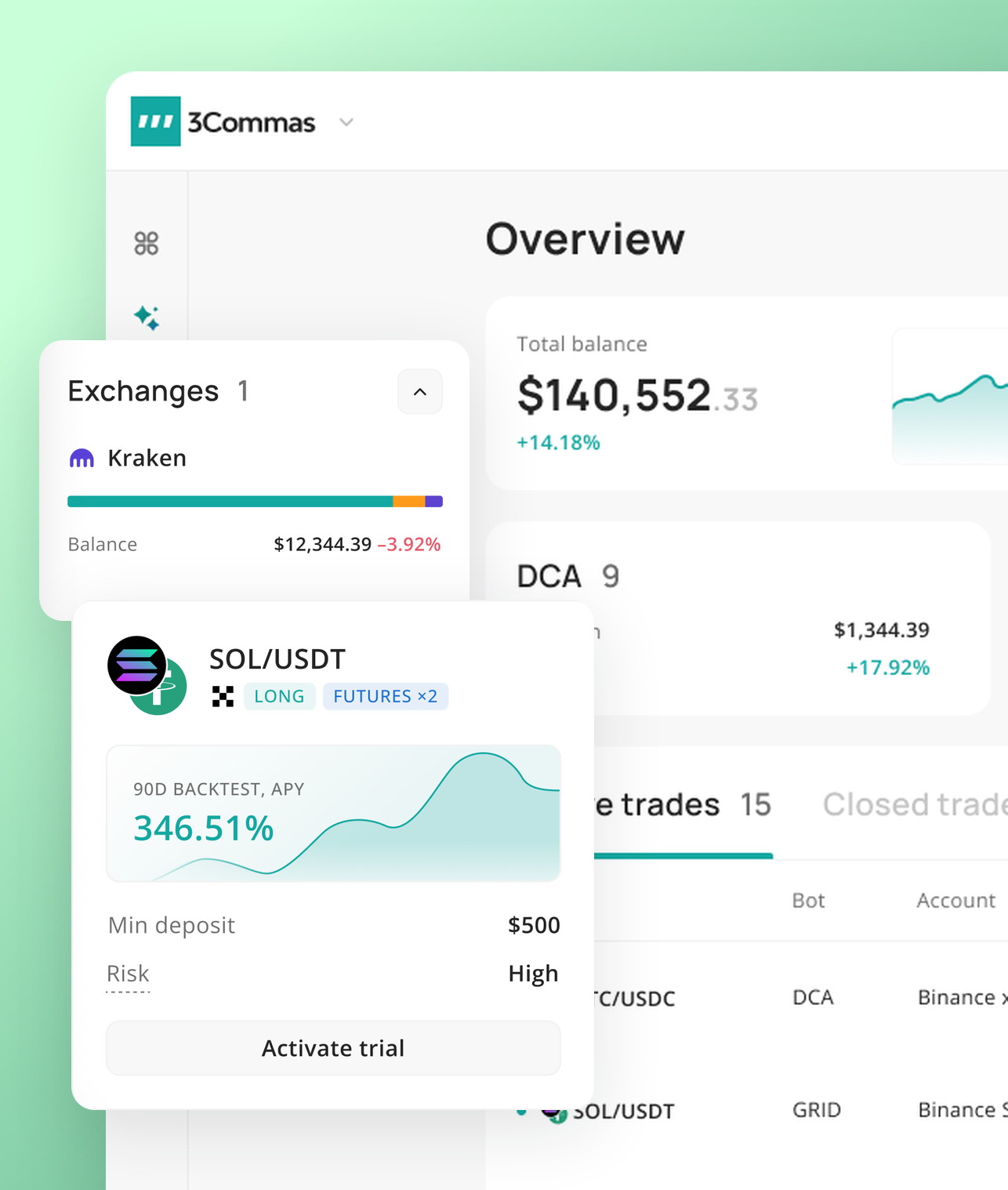
3Commas gives retail and professional traders a smart terminal, automated bots, and portfolio tools across major exchanges. I work on the core products, where dense market data has to stay readable and trustworthy when real money and live markets are on the line.
The problem
The surfaces are complex and data-driven, with many states and edge cases, and the audience runs from first-time users to professionals. The job is to make the product clear at the entry point without slowing down power users, and to back each change with activation, conversion, and retention data.
What I did
- Owned end-to-end design across web and mobile, from research and discovery through delivery and iteration, alongside PMs and engineers.
- Took an AI assistant (LLM) from zero to one, designing the core web and mobile flows and reaching 24% conversion from chat to bot creation and 32% to first action.
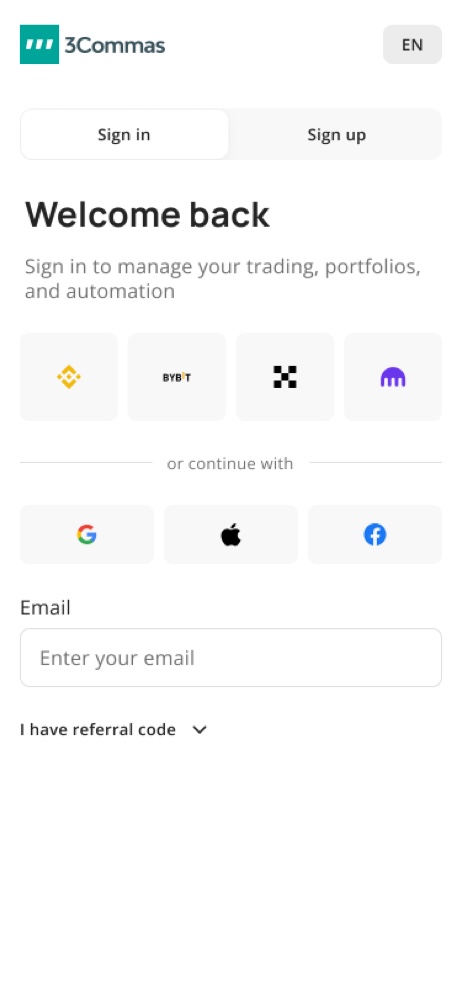
- Led a redesign of 30+ registration and login screens, lifting activation for new beginners, from sign-up to their first bot, +60% in the two weeks after launch.
- Reworked a complex, data-heavy statistics page across 10+ user scenarios, edge cases, and trading states.
- Redesigned the flows for strategy creation, copying, and sharing to improve usability and product understanding.
- Built and documented the team's design process in Notion, and ran 28 user interviews with session-recording and metric analysis to steer fast iterations.
- Prototyped in code and shipped small product and UI changes hands-on, working with AI dev tools like Claude Code and Cursor.
- Tightened how design, product, and engineering worked together, from demos to delivery rhythm, lifting the output of a two-designer-plus-freelancer team.
Dashboard
The dashboard is the first thing traders open every day, so it had to make the state of their money clear at a glance. The old version worked against that: the screen was busy with competing elements, and the details of a user's trades and bots were split across separate pages. I ran research and user surveys to learn what a trader actually needs to see daily, then rebuilt the dashboard around those essentials and moved the rest out of the way. The result is a focused daily view with less friction in everyday use.


DCA bot
The DCA bot is one of the platform's core tools, but setting it up asked a lot of the user up front. The goal was to make it simpler and clearer: put the decisions that matter first and keep advanced settings out of the way until they are needed. I reworked the flow and the screens around that idea. Overall DCA bot activation rose 27% across all segments, and user feedback was consistently positive.
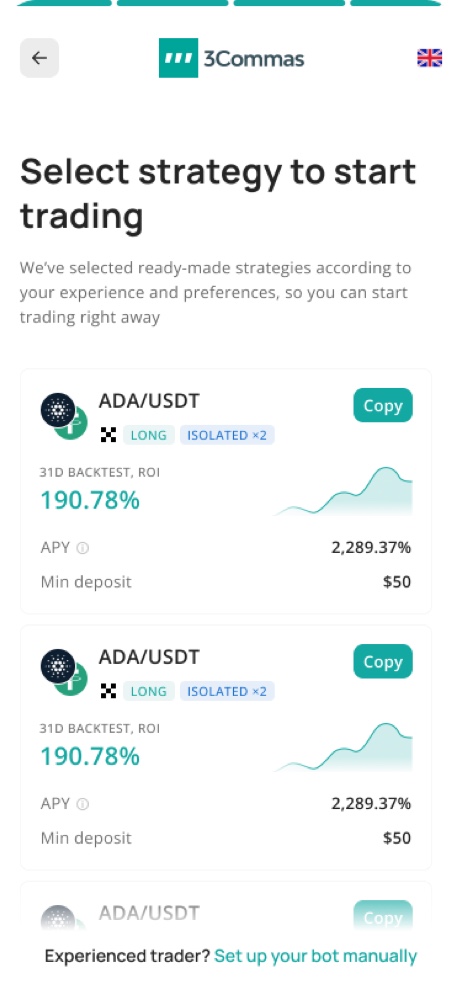
Design decision: one bot, three entry points. The DCA bot serves everyone from first-timers to pros, so a single form would fail someone. I split it by segment: ready-made strategies and a two-field quick start (pick an exchange, set the amount) for beginners, a manual form with more flexibility for mid-level users, and a full advanced form covering the entire DCA feature set for pros.


Creation flow
The staged path from strategy choice to a running bot.
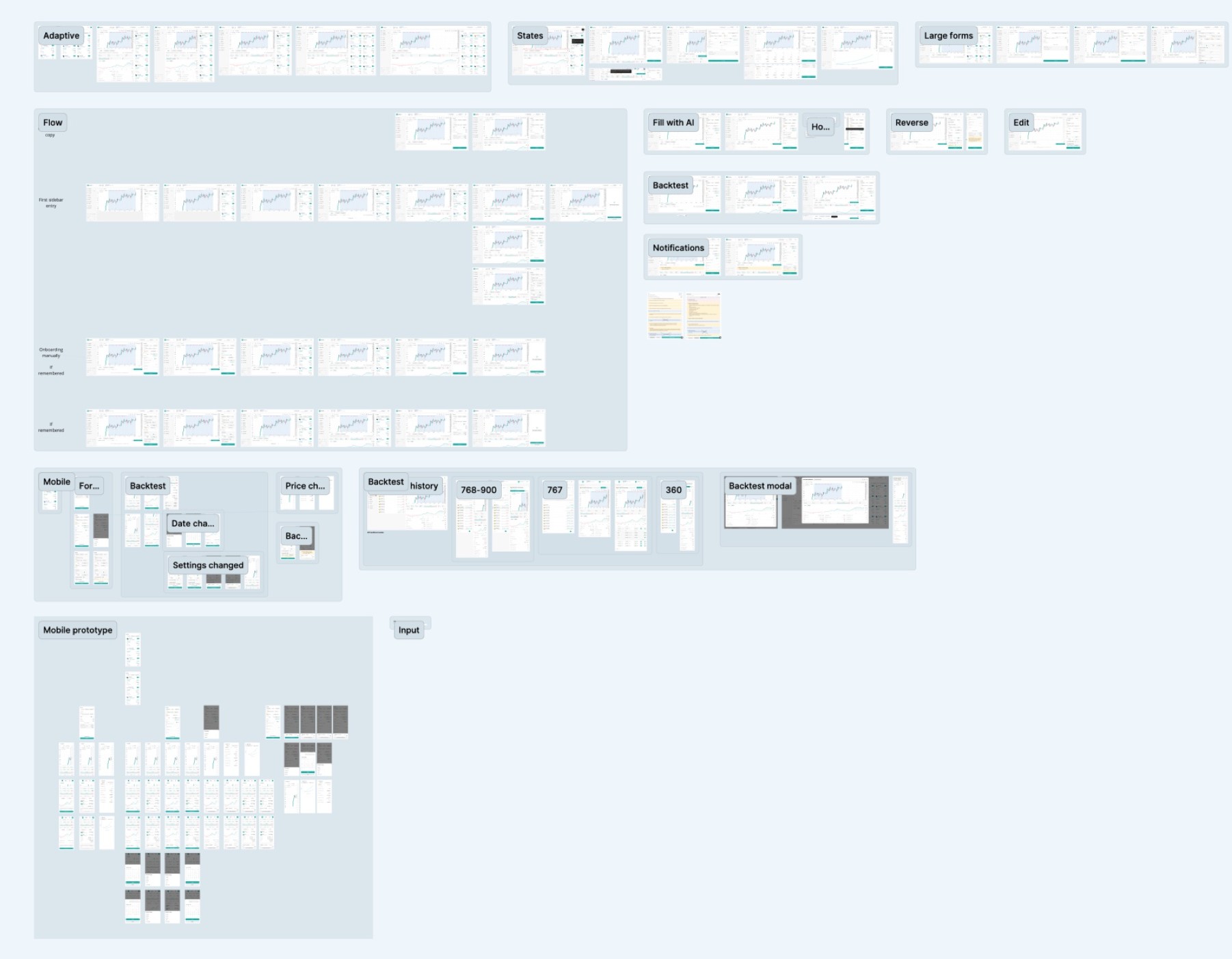
Solution search
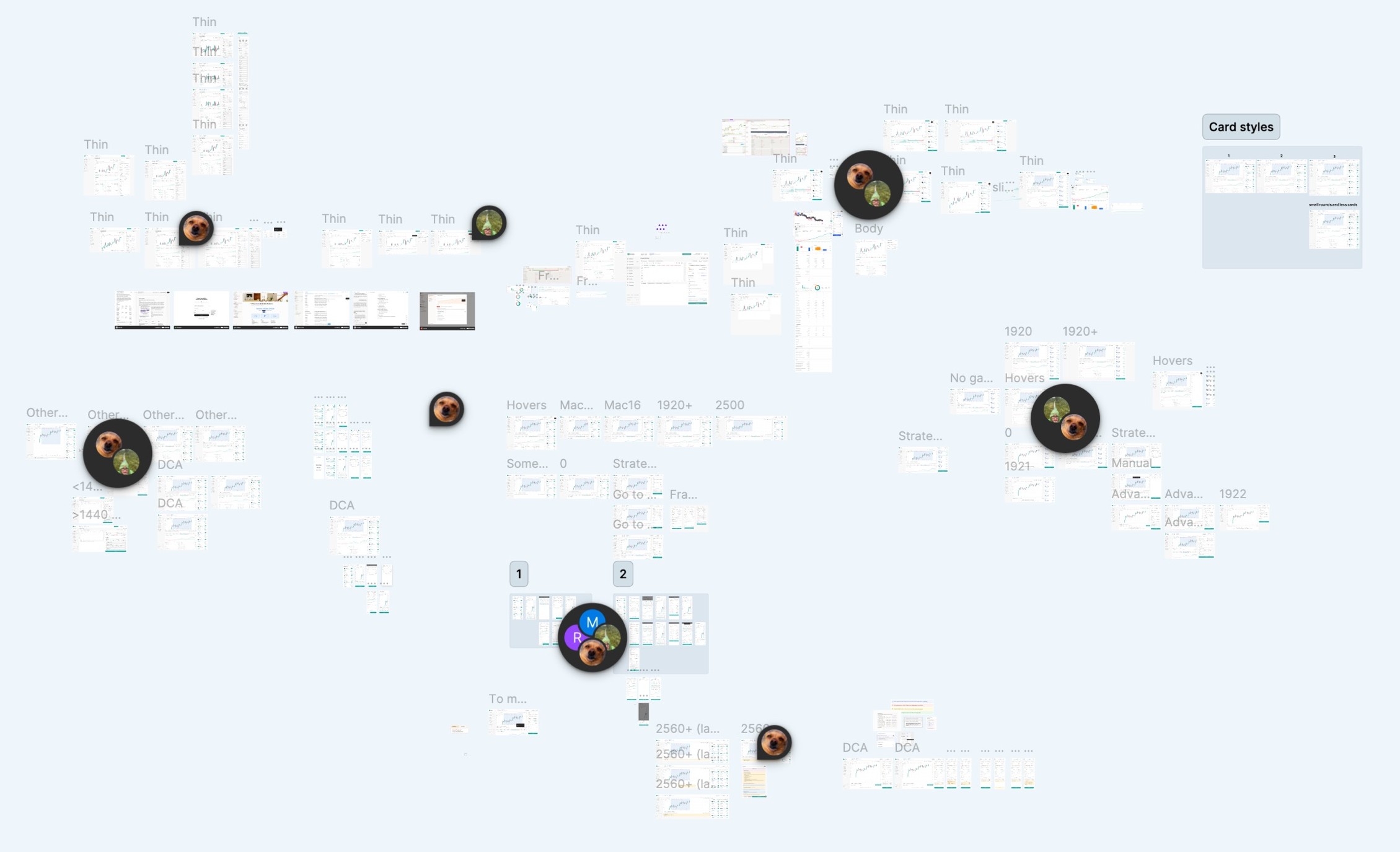
The exploration behind the builder: layout options, card styles, breakpoints, and states, before landing on the three entry points.


AI assistant
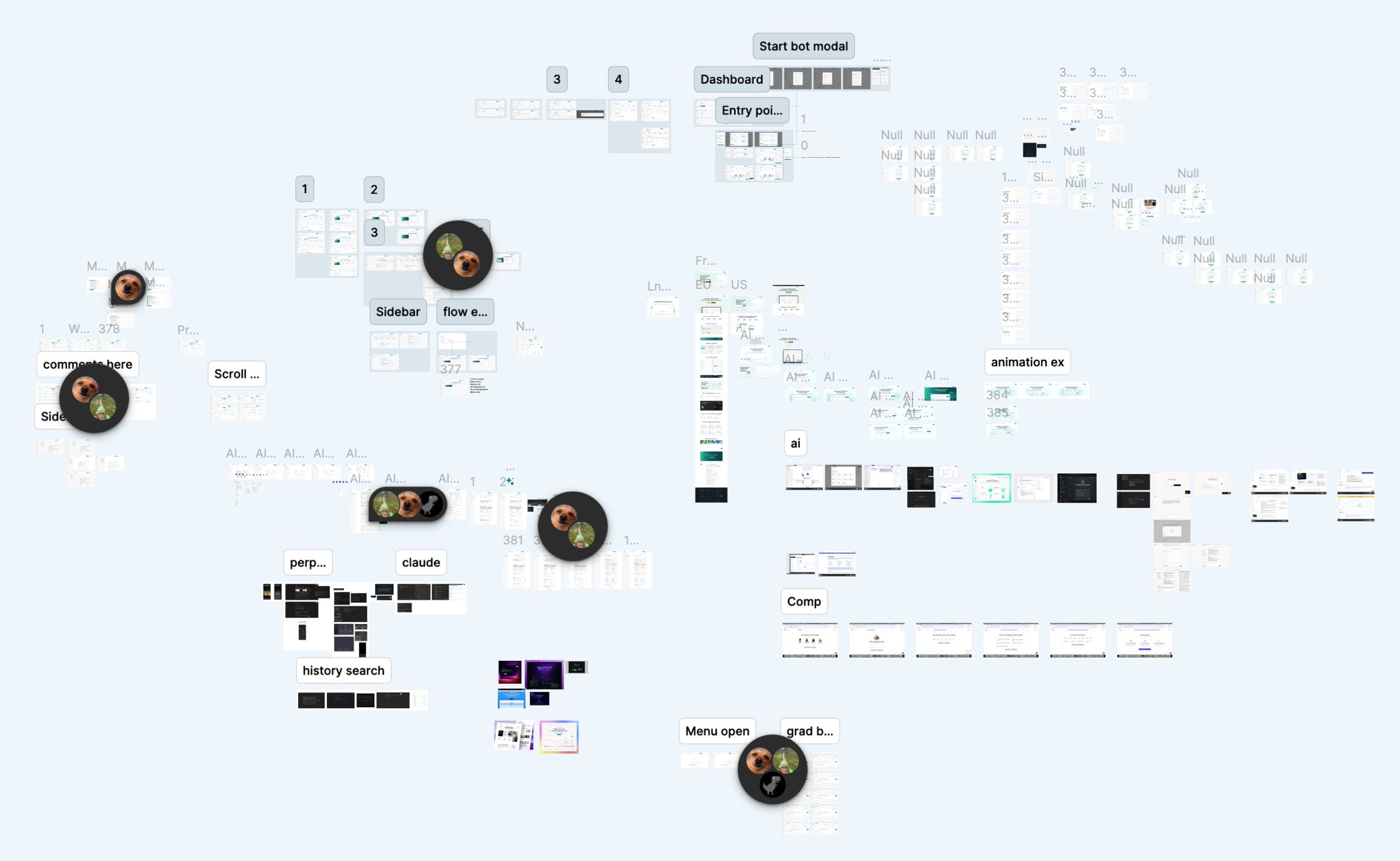
An AI assistant, taken from zero to one. Users describe what they want in plain language, and the assistant proposes a strategy, backtests it, and turns it into a ready-to-run bot, with a fallback to TradingView and Pine Script when a strategy goes beyond the built-in features. I designed the core web and mobile flows, reaching 24% from chat to bot creation and 32% to first action.
Design decision: earn trust before automating money. Letting an AI set up real trades is a trust problem first, so the assistant always proposes and backtests a strategy before anything runs, which makes the backtest the moment a user decides to rely on it. When a strategy goes beyond the built-in features, the Pine Script and TradingView fallback keeps advanced users from hitting a wall. Most of the gain came from beginners: many arrived from the landing page and went from zero to a running strategy inside the assistant, which is where the funnel moved.

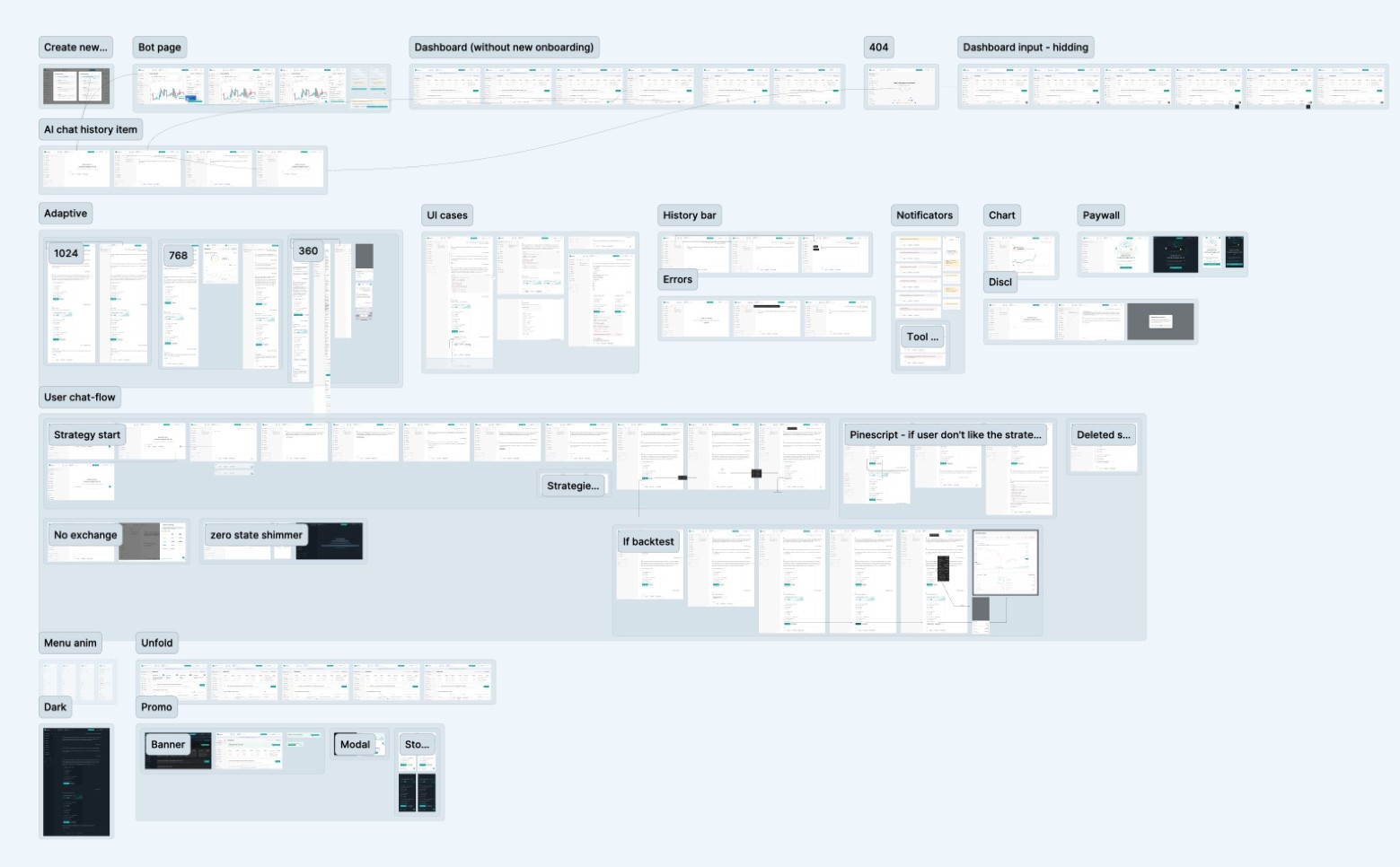
AI flow
The assistant end to end: the chat flow, strategy creation and backtests, the Pine Script fallback, and the adaptive, dark, and edge-case states.
Solution search
The exploration behind the assistant: chat and sidebar directions, history and entry points, competitor references, and states.
Onboarding
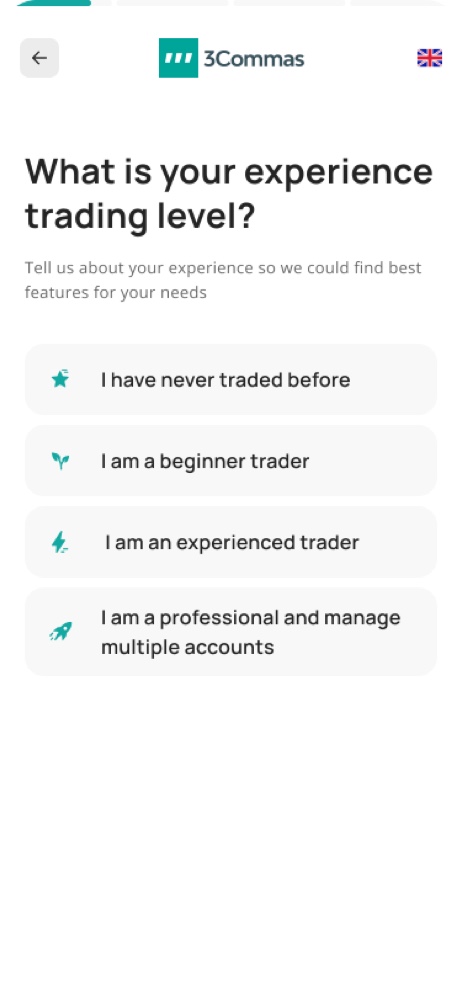
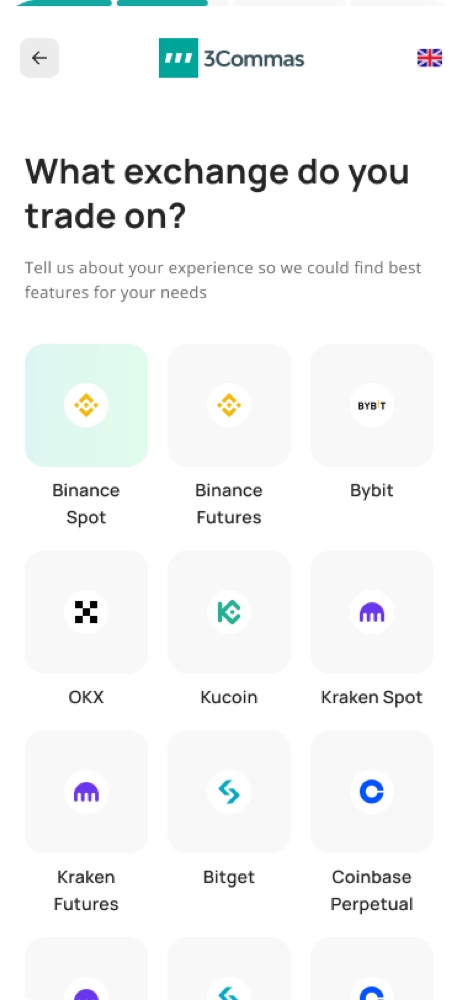
The AI-assisted onboarding, taken from zero to one: a short guided path from first visit to a running bot, tuned against activation and conversion data, and built for web and mobile alike.
Design decision: one onboarding for every user, not just beginners. The flow branches on self-declared experience and routes each segment to the right entry point, so it works for first-timers and seasoned traders alike, across the full set of trading features. Mapping every case and branch up front, rather than optimizing a single happy path, is what lifted activation across the whole funnel.


Research
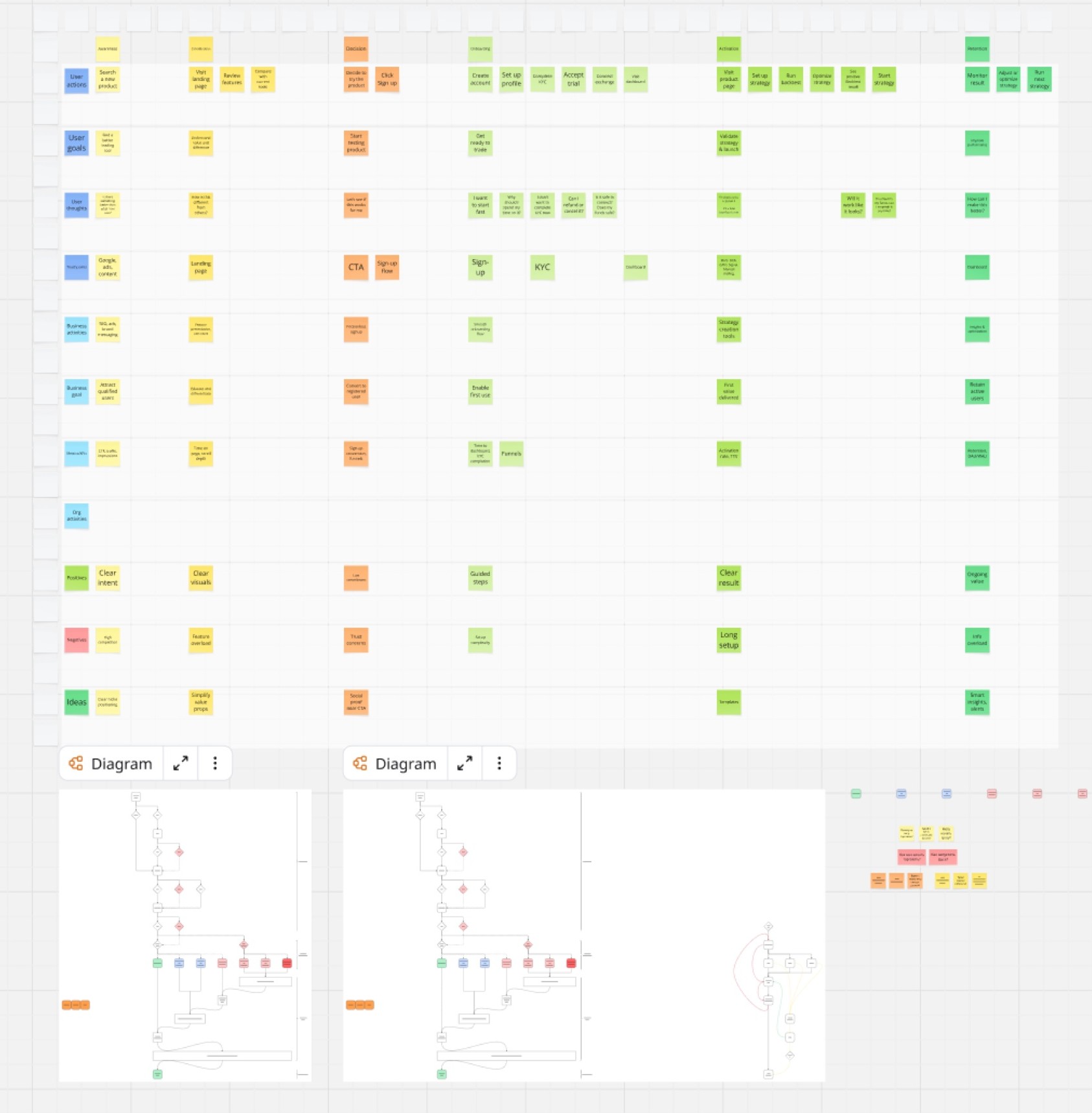
Discovery behind the work: a customer-journey map across the funnel, competitive benchmarking, and the flows that steered the redesigns and the metrics we tracked.
Journey and flows
The funnel mapped to actions and metrics, with the flows behind it.
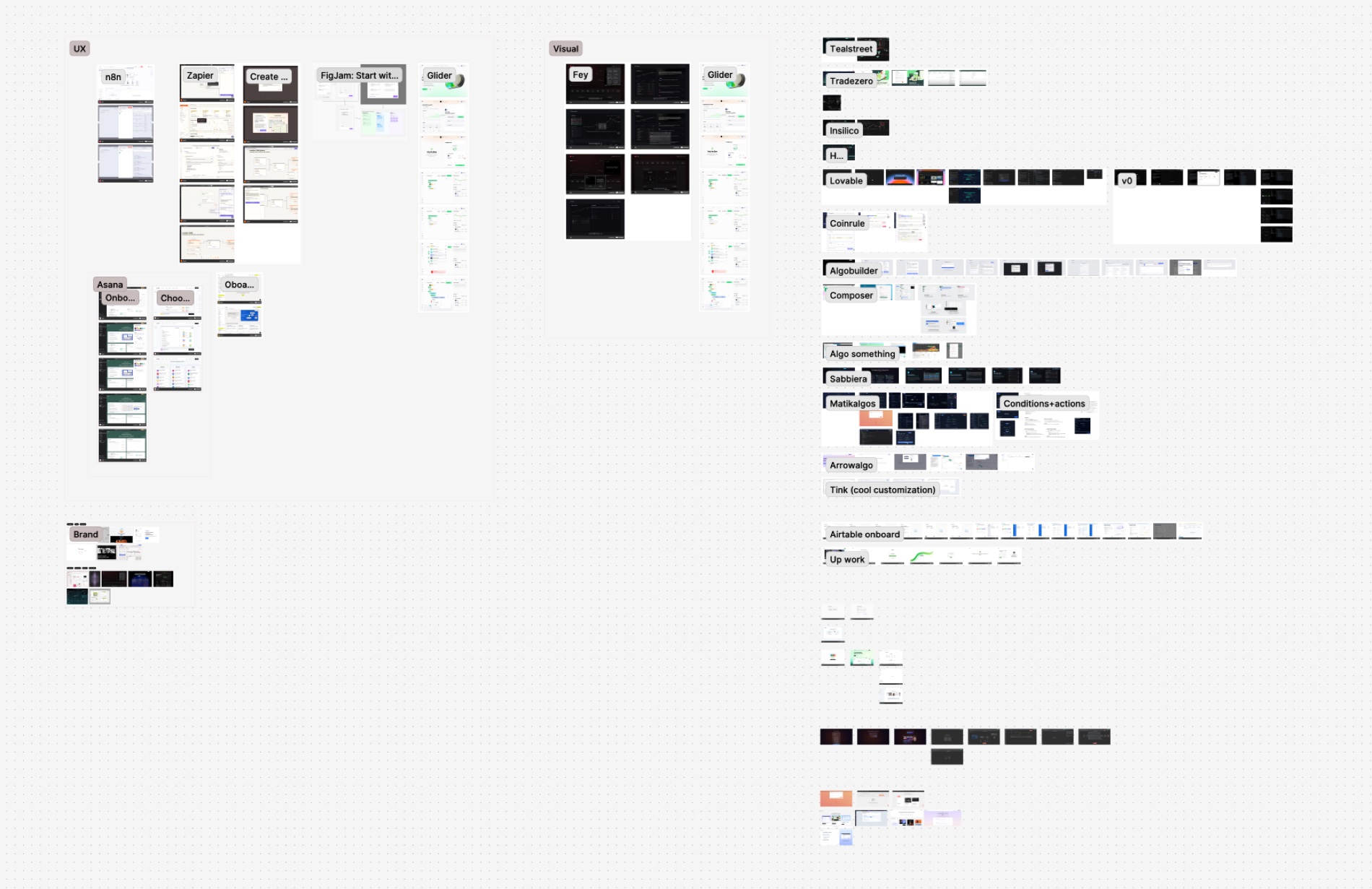
Competitive research
Benchmarking UX and visual patterns across trading and SaaS products.
Customer-journey map
From awareness to retention, tied to user actions, goals, and decisions.

Impact
Activation is the share of people who open the builder and launch their first bot, measured across all segments in the weeks after launch. It was the design goal. Subscriptions also rose 5% in that period, and this work was one of the drivers.
Insights
Ask about control, not experience. People rate their own level poorly, and what they want is really more or less control.
Simple does not mean fewer features. I kept them all, and only changed the order they appear in.
In money products, show the result next to the setting. The visible backtest did more than any copy.